


Page 285 - Abstract Book KONIKA 18
P. 285
Neonatology

                                              P-NEO-001
                          Follow-up Plan for Neonatal with Turner Syndrome

                                         Fitriyani, Adhie Nur Radityo
                  Department of Pediatrics, Faculty of Medicine Universitas Diponegoro/Dr. Kariadi General Hospital,
                                        Semarang, Central Java, Indonesia
                                               Abstract
            Background Turner syndrome is a chromosomal disorder with incidence approximately 1:2000 live births.
            Various comorbidities have been reported and need to be monitored regularly for further prevention.
            Objective To describe a follow-up plan for neonatal with Turner syndrome Case A full-term neonate was
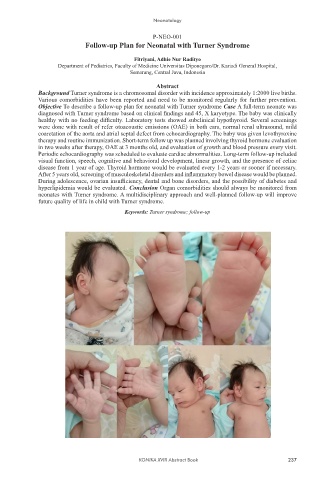
            diagnosed with Turner syndrome based on clinical findings and 45, X karyotype. The baby was clinically
            healthy with no feeding difficulty. Laboratory tests showed subclinical hypothyroid. Several screenings
            were done with result of refer otoacoustic emissions (OAE) in both ears, normal renal ultrasound, mild
            coarctation of the aorta and atrial septal defect from echocardiography. The baby was given levothyroxine
            therapy and routine immunization. Short-term follow up was planned involving thyroid hormone evaluation
            in two weeks after therapy, OAE at 3 months old, and evaluation of growth and blood pressure every visit.
            Periodic echocardiography was scheduled to evaluate cardiac abnormalities. Long-term follow-up included
            visual function, speech, cognitive and behavioral development, linear growth, and the presence of celiac
            disease from 1 year of age. Thyroid hormone would be evaluated every 1-2 years or sooner if necessary.
            After 5 years old, screening of musculoskeletal disorders and inflammatory bowel disease would be planned.
            During adolescence, ovarian insufficiency, dental and bone disorders, and the possibility of diabetes and
            hyperlipidemia would be evaluated. Conclusion Organ comorbidities should always be monitored from
            neonates with Turner syndrome. A multidisciplinary approach and well-planned follow-up will improve
            future quality of life in child with Turner syndrome.
                                      Keywords: Turner syndrome; follow-up


                                           KONIKA XVIII Abstract Book                                                                     237

