


Page 256 - Abstract Book KONIKA 18
P. 256
Infection & Tropical Disease

                                               P-ITD-006
                              Successful Treatment of Cepacia Syndrome
               with A Combination of Intravenous Antibiotics, Systemic corticosteroid, and
                 Lung Abscess Drainage by Using Double Lumen Hemodialysis Catheter

                                                            2
                                    1
                                                 1
                           Citra Cesilia , Hotber Pasaribu , Hariadi Hatta , Andreas Makmur 3
                                                                       3
                                  1
                                                  2
                Department of Child Health , Department of Surgery , and Department of Radiology , Faculty of Medicine,
                         Universitas Riau, Arifin Achmad General Hospital, Riau, Pekanbaru, Indonesia
                                               Abstract
            Background Burkholderia cepacia (Bcc) can cause a fatal combination of necrotizing pneumonia, worsening
            respiratory failure, and bacteremia, known as Cepacia syndrome, which is currently untreatable.  Objective
            To demonstrate favorable response to intravenous antibiotics, systemic corticosteroid, and lung abscess
            drainage using double lumen hemodialysis (HD) catheter in a 14-month-old boy with necrotizing pneumonia
            complicated by lung abscess and septic shock due to Burkholderia cepacia.  Case A 14-month-old boy
            was reffered with shortness of breath, fever, decreased consciousness, and upper gastrointestinal bleeding.
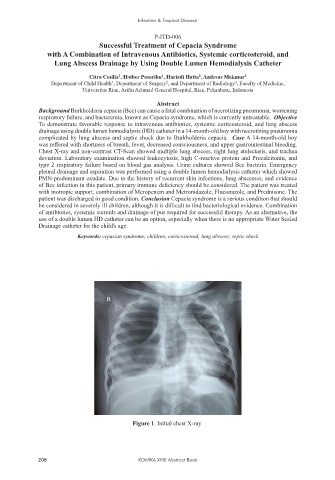
            Chest X-ray and non-contrast CT-Scan showed multiple lung abscess, right lung atelectasis, and trachea
            deviation. Laboratory examination showed leukocytosis, high C-reactive protein and Procalcitonin, and
            type 2 respiratory failure based on blood gas analysis. Urine cultures showed Bcc bacteria. Emergency
            pleural drainage and aspiration was performed using a double lumen hemodialysis catheter which showed
            PMN-predominant exudate. Due to the history of recurrent skin infections, lung abscesses, and evidence
            of Bcc infection in this patient, primary immune deficiency should be considered. The patient was treated
            with inotropic support, combination of Meropenem and Metronidazole, Fluconazole, and Prednisone. The
            patient was discharged in good condition. Conclusion Cepacia syndrome is a serious condition that should
            be considered in severely ill children, although it is difficult to find bacteriological evidence. Combination
            of antibiotics, systemic steroids and drainage of pus required for successful therapy. As an alternative, the
            use of a double lumen HD catheter can be an option, especially when there is no appropriate Water Sealed
            Drainage catheter for the child's age.
                        Keywords: cepacian syndrome; children; corticosteroid; lung abscess; septic shock


                                        Figure 1. Initial chest X-ray


            208                           KONIKA XVIII Abstract Book

